Light is the only thing a photographer cannot fake. In New York City the best light arrives twice a day, and most wedding timelines miss both.
We are Lens of Fariha, an affordable Queens-based photographer duo, and Fariha is the female half of the team. Muslim wedding photography in NYC is a large part of what we shoot: the nikkah, the mehendi, the haldi, the walima. Below is where and when we chase golden hour across the city, how to fit it into a Muslim wedding day without disrupting the ceremony or prayer, and how the same rules apply to a couple session or your own phone.
Why Golden Hour Matters at a Muslim Wedding
Most of a Muslim wedding happens indoors. Mosque halls, banquet venues, and community centers are lit by whatever fixtures are overhead, usually a mix of warm tungsten and green-tinged fluorescent that fights itself in every frame. Those rooms are where the day happens and we light them properly, but they are not where your favorite two photographs will come from.
Your favorite two photographs come from the fifteen minutes we steal outside. That is the entire argument for planning around the sun: one short, deliberate walk out of the hall while the light is still low and warm, and the couple portraits are done.

What Golden Hour Actually Is
Golden hour is the roughly 60 minutes after sunrise and the 60 minutes before sunset, when the sun is low and the light travels through more atmosphere. It comes out soft, warm, and directional — the opposite of harsh midday sun. Skin glows, shadows stretch, and backgrounds turn amber. There is no filter that truly replicates it.
When to Shoot in NYC, Month by Month
- Summer: sunrise near 5:30 AM, sunset near 8:20 PM. Evening golden hour is long and forgiving — book 7:00–8:15 PM.
- Winter: sunset as early as 4:30 PM. Golden hour is short and precious; arrive 45 minutes early.
- Spring & fall: the sweet spot — comfortable temperatures and a generous window. Our favorite seasons for engagement sessions.
Always check a sunrise/sunset app for your exact date and add buffer. The light changes fast in the final ten minutes.
Fitting Golden Hour Into a Nikkah and Walima Timeline
The one detail couples forget: golden hour ends at maghrib. The sunset prayer and the best light are the same moment, so if portraits are not already underway when the adhan is called, that window is gone for the day. Here is how we plan a Muslim wedding around it.
- Work backwards from maghrib, not forwards from the nikkah. Ask us for the maghrib time on your date, then reserve the 40 minutes before it for couple portraits. Everything else in the timeline moves around that block.
- Slot portraits between the nikkah and the walima. There is almost always a gap while guests are seated and food is set out. That gap is usually when the light is best, and nobody misses you.
- Winter nikkahs need an early start. With maghrib as early as 4:30 PM, an afternoon ceremony can end after golden hour. For winter dates we suggest first-look or pre-ceremony portraits instead.
- Ramadan and summer dates run late. When maghrib lands near 8:20 PM, iftar and the walima collide with the best light. We shoot portraits before guests arrive and cover iftar as documentary.
- Segregated events are a two-photographer job. Fariha covers the women's side and the bride's preparation; Midhath covers the men's. It means the bride gets a female photographer for the parts of the day where that matters, and no moment goes uncovered.
Tell us your prayer timings when you book and we build the shot list around them rather than asking you to work around us.
The NYC Spots That Actually Work
- Bethesda Terrace, Central Park. Stone arches catch warm bounce light. Go at opening to beat crowds.
- Brooklyn Bridge & DUMBO. Sunrise here is empty and unreal. By 8 AM it is packed — be early.
- The Battery & Hudson River piers. Unobstructed western horizon means the longest, cleanest sunsets in Manhattan.
- Gantry Plaza State Park, Queens. Our home borough — the skyline lights up gold across the East River with far fewer people.
- Fort Tryon Park. Elevated, leafy, and quiet. Underrated for portraits.
For a Muslim wedding the practical filter is different: the spot has to be within a short drive of the venue, because you have minutes, not hours. Astoria Park and Gantry Plaza work for venues around Queens, Prospect Park and DUMBO for Brooklyn, and most banquet halls have a service door, a stairwell, or a parking-lot edge that catches clean side light at the right hour. We scout that before your date so the walk outside takes ten minutes total.

Use Backlight, Don't Fight It
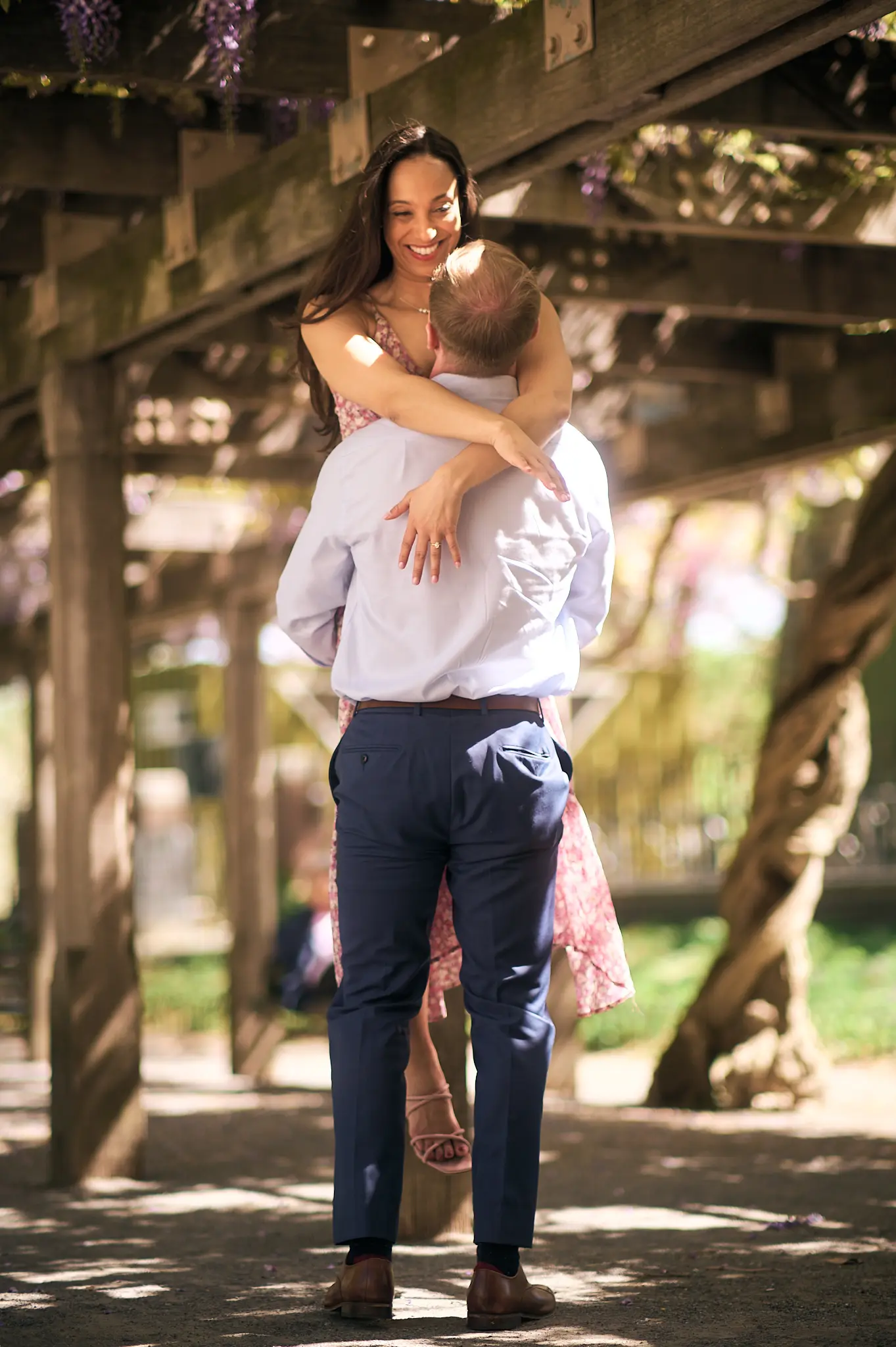
Put the sun behind your subject, not in their face. Backlighting creates a rim of glow around hair and shoulders and stops people from squinting. Expose for the face, let the background go bright, and you get that dreamy, cinematic look — like the silhouette below.

The Working Photographer's Trick: Shoot Through the Blue Hour
Do not pack up when the sun disappears. The 20 minutes after sunset — blue hour — give you cool, even, moody light and a glowing city behind your subject. Some of our favorite frames happen after everyone assumes the shoot is over.

Book a Golden-Hour Session
Looking for a Muslim wedding photographer in NYC, or want your couple, engagement, or wedding photos shot in the best light New York gives? Email an affordable, female-led Queens-based duo at [email protected], or book a session. When you book we send you the exact golden-hour and maghrib times for your date.
More on our About page, or browse the rest of the Journal.
This is Lens of Fariha. Two lenses, one story.